Stop Guessing, Start Measuring
For years, SEO was a mix of folklore and gut feeling. You heard that longer content ranks better, so you padded every post to 2,000 words. Someone told you that exact-match domains still work, so you bought a weirdly specific URL. Then Google updated its algorithm and your rankings vanished overnight. That cycle of guesswork and panic is exhausting, and it is also unnecessary. The shift toward evidence-based seo means making decisions from data, not hunches. It treats optimization like a science: form a hypothesis, test it, measure the result, and keep what works.
This is not about overcomplicating things. Evidence-based seo simply asks you to look at what is actually happening in search results for your target queries. Instead of assuming that a certain keyword density or heading structure will move the needle, you check the pages that already rank. You analyze their content, their backlink profiles, their page speed, and their user engagement. Then you build a plan that matches those signals, not a template that worked for someone else in a different niche.
What the Data Actually Says About Ranking Factors
There is no shortage of studies and correlation analyses from tools like Ahrefs, Moz, and SEMrush. They publish breakdowns of what top-ranking pages have in common. Brian Dean at Backlinko has run some of the most cited research on content length and backlinks. Neil Patel regularly shares case studies from real campaigns. Search Engine Journal and Search Engine Land cover algorithm updates and testing results. The problem is that many people read these studies, nod along, and then go back to doing the same old things.
But here is the thing: correlation is not causation. Just because most top-ranking pages have a certain number of backlinks does not mean that backlinks alone got them there. Google Search Central has repeatedly stated that no single factor dominates. The ranking system uses hundreds of signals, and what matters most varies by query. That is why evidence-based seo has to be local to your situation. You cannot take a global study and apply it blindly to your small corner of the web.
Practical Steps to Build an Evidence-Based Process
Start with your own data. Google Search Console and Google Analytics give you a wealth of information about how your pages perform. Look at which queries bring impressions, which ones get clicks, and where your click-through rate falls short. Open Google Trends to see whether interest in your topics is rising or fading. Then look at the SERP itself. What features appear for your target keywords? Are there featured snippets, knowledge panels, or video results? That tells you what Google thinks users want.
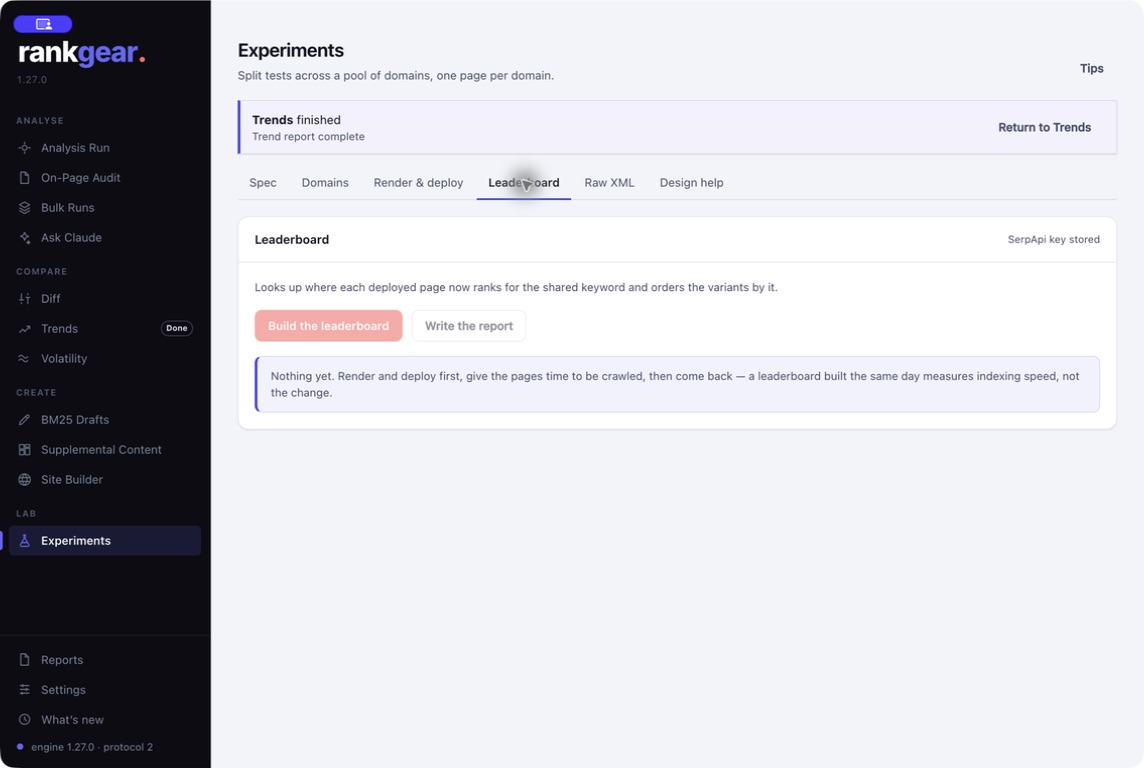
Next, analyze the top five or ten results for your main keywords. Use tools like Ahrefs or SEMrush to pull their backlink data, domain authority, and content metrics. But do not stop at the numbers. Read the actual content. Is it comprehensive? Does it answer the question directly? How is it structured? Look at the headings, the use of images, and whether they include schema markup. Schema.org structured data helps search engines understand your content better, and it can make your page eligible for rich results.
Then, run your own tests. Change one variable at a time. Maybe you rewrite a title tag, improve your Core Web Vitals, or add an FAQ section with schema. Give it a few weeks, then check Google Search Console for changes in impressions and position. This is the essence of evidence-based seo: you are not guessing, you are experimenting with a clear measurement plan.
The Role of Technical Health and User Experience
Technical SEO is often where evidence-based thinking pays off fastest. Google PageSpeed Insights shows you exactly how your pages perform on Core Web Vitals, which are a confirmed ranking factor. If your mobile page takes six seconds to load, that is not a mystery, it is a problem with a fix. Compress images, leverage browser caching, eliminate render-blocking JavaScript. The data tells you what to prioritize.
User experience matters beyond speed. Google Search Quality Rater Guidelines emphasize expertise, authority, and trust, or E-A-T. These guidelines are public, so we know what Google's human raters are looking for, even if the algorithm does not directly use their scores. Clear authorship, accurate information, and a good reputation all contribute. For local businesses, a complete and accurate Google Business Profile is essential. Reviews, photos, and consistent NAP details across the web build trust with both users and search engines.
Content That Earns Its Place
Content is still king, but only if it earns that crown. Evidence shows that longer content tends to rank better, but only when it is genuinely useful. Brian Dean's research at Backlinko found that the average top-ranking page had around 1,900 words, but that does not mean you should pad your posts to hit a word count. Instead, look at what the top results cover. If they all include a section on pricing, you probably need one too. If they all use videos, consider embedding a relevant one.
Use tools like RankMath or Yoast SEO to help with on-page optimization, but do not treat their traffic light scores as gospel. They are guidance, not judgment. The real evidence is in your rankings and engagement metrics. A page can score 95 in Yoast and still fail because the content is thin. Conversely, a page with a mediocre SEO score can rank well because it perfectly answers the query.
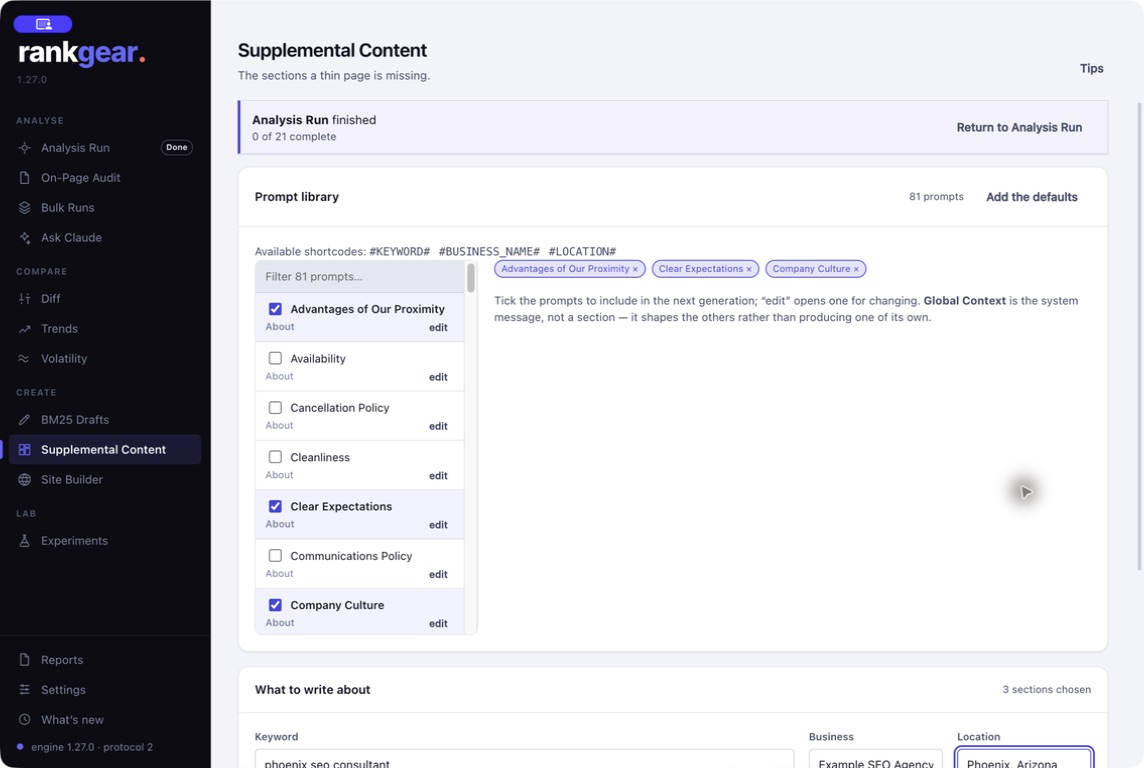
One underrated source of evidence is your own search queries. Filter Google Search Console for queries where you have high impressions but low clicks. That often means your page is relevant enough to show, but the title tag or meta description is not compelling. Rewrite those with a clear benefit or a question that matches user intent. Sometimes a small tweak like that lifts your click-through rate noticeably.
Building Links with Proof, Not Hope
Backlinks remain a strong ranking signal, but the quality matters more than quantity. A few links from authoritative sites in your niche are worth more than hundreds from spammy directories. Instead of chasing every link opportunity, use evidence to find what your competitors have. Tools like Ahrefs and Moz let you see which pages are linking to them. If a site links to three competitors but not to you, that is a clue. They are interested in that topic, and you might be able to earn a link with a better resource.
Guest posting still works, but only when the host site has real relevance and traffic. Check their domain authority and see if they rank for related terms. Use Google Search Console to track the impact of your link building. If you notice a sudden jump after a particular link, that is evidence that the tactic is working. If nothing changes after several months, reassess your approach.
When to Trust Your Instincts, When to Trust the Data
There is always a place for intuition in SEO. You know your audience better than any tool. But intuition should be a starting point, not the final word. Evidence-based seo means you have a hypothesis, you test it, and you let the results guide your next move. That does not mean ignoring your gut; it means verifying it.
For example, you might believe that a certain keyword is too competitive and you should target a long-tail variant. Google Trends and keyword research tools can confirm whether search volume exists. You might think your product pages are underperforming because of content, but the data might show that the real issue is internal linking or page speed. The evidence changes your plan.
The SEO community is full of conflicting advice. Search Engine Land and Search Engine Journal often publish articles that disagree with each other. That is healthy, but it can be paralyzing. The way out is to test in your own sandbox. Run experiments, document the outcomes, and build a playbook that is unique to your site.
The Future Is Measured
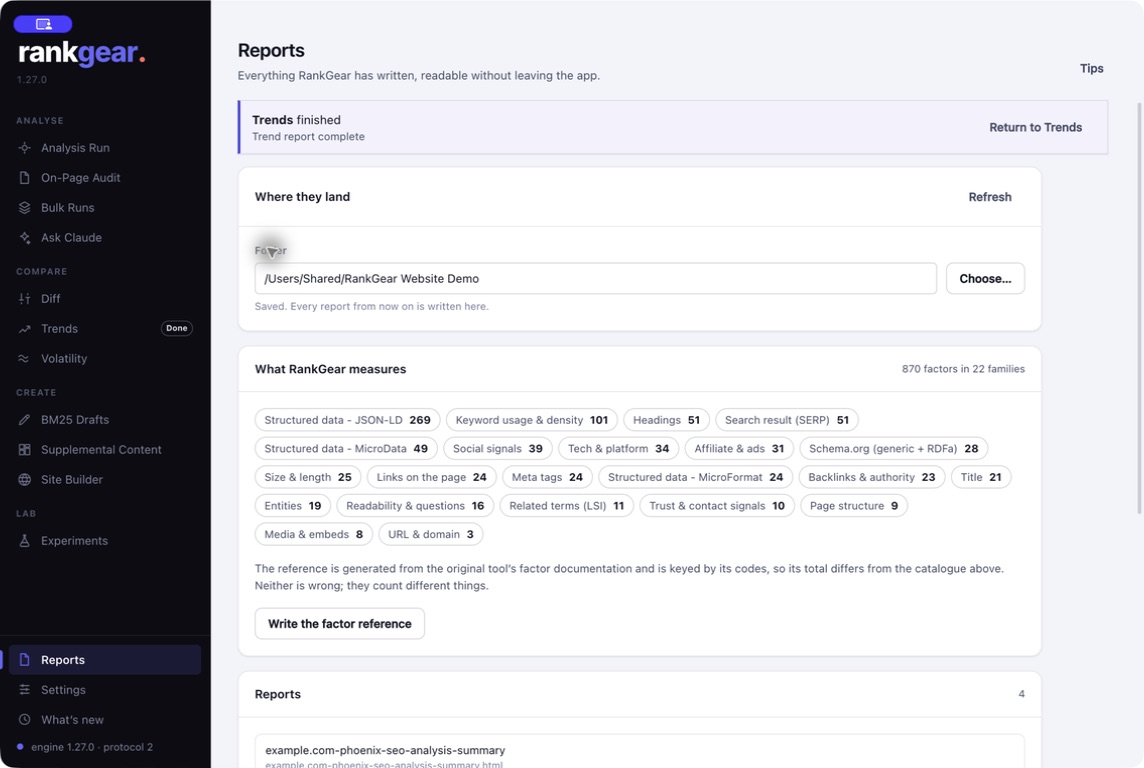
As search evolves, the tools for gathering evidence will get better. Google Search Console is already more transparent about how it crawls and indexes. Core Web Vitals are a clear metric, and the Google PageSpeed Insights report gives you a clear checklist. SERP features are visible and trackable. The gap between what we know and what we guess is shrinking.
The biggest risk is not lack of data, it is ignoring the data you already have. Most sites have years of Google Analytics history, search console data, and competitor benchmarks. That is a goldmine. The challenge is turning it into a repeatable process. That is what evidence-based seo is really about: a commitment to learning from what the search results tell you, not just hoping for the best.
So the next time someone tells you that a certain tactic is guaranteed to work, ask for the evidence. Ask for the study, the case study, or the data. If they cannot provide it, treat that advice as a hypothesis to test, not a rule to follow. Your rankings will thank you.